Pictured above is the Cotton Club's all white clientele.
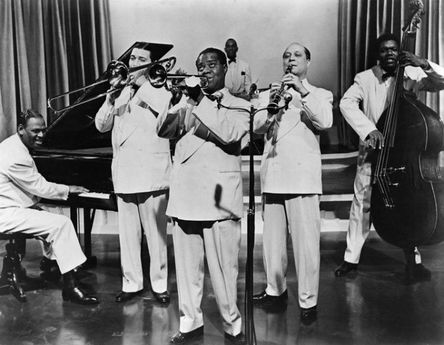
Pictured above is Louis Armstrong and his orchestra. Nationally known, Armstrong's orchestra played weekly on the radio and released albums, bringing publicity to the Cotton Club as a whole.
|
In 1924, the Cotton Clubs, a whites only club was established in Harlem. Ran by a New York mobster, the Cotton Club would sell alcohol to its clientele during the Prohibition. New York's white elites would come and enjoy African-American musicians such as Louis Armstrong, Cab Calloway, Duke Ellington, and Ethel Waters. Armstrong's orchestra played there from 1927 to 1930. Though the Club's white only clientele were entertained by black musicians they would never socialize with them in a separate environment. Though the social divide between whites and blacks was still evident at the Cotton Club, the cultural dived between them was some what lessened and an appreciation of african-american culture began.
|
